Organizers
is a FWO Senior Postdoctoral Fellow at the Centre for Literary and Intermedial Crossings (CLIC) at Vrije Universiteit Brussel with her project “Postdigital Poetics in Contemporary Print Fiction” (2026–2029) and affiliated with the Department of General and Comparative Literature at Gutenberg Institute for World Literature and Written Media at the Johannes Gutenberg University Mainz.
Anna-Lena holds a PhD in Comparative Literary and Cultural Studies from Justus Liebig University Gießen, Germany. Her doctoral thesis engaged with the co-evolution of visual media (such as photography and early film) and the critical re-orientation of postmodern historical novels from the 1960s onwards. A revised version, ‚Geschichte zerfällt in Bilder, nicht in Geschichten’ – Visualität in der literarischen Geschichtsdarstellung, was published in 2024 with Brill in the Inter/Media series.
Anna-Lena Eick held research and teaching positions at the University of Augsburg, Justus Liebig University Gießen and Johannes Gutenberg-University Mainz, as well as at Østfold University College. She was a Visiting Research Fellow at the CRC Home/s at the University of Heidelberg from 2025–2026, a Visiting Scholar at Université de Picardie Jules Vernes in 2026 and at Vrije Universiteit Brussel (CLIC) in 2025. Anna-Lena is an active member of the Frankfurt Memory Studies Platform (FMSP), the German Comparative Literature Association (DGAVL) and she recently co-founded the Postdigital Narratives Network. Her research interests include narratology, inter- and transmediality studies, digital culture, as well as transcultural studies and the postmigrant paradigm.
is Professor for the Dynamics of Virtual Communication Spaces at the University of Regensburg, where she leads the Digital Area Studies Lab (DAS|LAB), which she founded in 2023. Previously held full professorships at the University of Wales (Bangor), the University of Alberta (Canada) and the University of Bergen (Norway). She has published 12 books and over 80 peer-reviewed articles on digital fiction and literary computer games, body image, femtech and digital media, critical community co-design and narrative therapy, discourses of gaming, the spatial design and narrative potential of virtual realities, as well as in methods of digital humanities and empirical reader research. She has been a Director of the Electronic Literature Organization since 2018 and, since 2019, Principal Editor of the Bloomsbury “Electronic Literature” book series. Her latest projects include the de Gruyter Handbook of Language and Digital Culture (co-edited with Carmen Lee); an edited collection on Videogames as Folkworlds (with Dom Ford and Laura Niebling, forthcoming with Play Story Press), and a DFG/AHRC-funded digital folklore project titled “Project StoryMachine” (2025-28). Her research on postdigital reading strategies in immersive VR fiction (with Alice Bell) was published in Anglica 33(2), 2024.

is Associate Professor of Culture Studies at the School of Humanities and Digital Sciences, Tilburg University. She was Marie Curie Global Fellow at UC Santa Barbara and Junior Core Fellow at the Institute of Advanced Study, Budapest. She wrote Big Books in Times of Big Data (Leiden UP, 2019) and, with Lucie Chateau, Digital Culture and the Hermeneutic Tradition: Suspicion, Trust, and Dialogue (Routledge, 2024). Articles appeared in journals such as European Journal of English Studies, Medical Humanities, Narrative, Digital Humanities Quarterly, Celebrity Studies, Games & Culture, Language & Literature, and Journal for Creative Behavior. Within the field of the postdigital, her work examines intersections between literature and new media, focusing on the destabilization of categories such as author, narrator, and reader, as well as the blurring of boundaries between fact and fiction.
Members

is Professor of New English and American Literature at JLU Giessen University (Germany) and Past President of the International Society for the Study of Narrative (ISSN). He is the author of Narrating the Prison (Cambria Press, 2007) and Unnatural Narrative: Impossible Worlds in Fiction and Drama (University of Nebraska Press, 2016). In 2013, he won a prize (the so-called Habilitationspreis) for his Habilitation, which was awarded by the German Association for the Study of English. Alber also received fellowships and research grants from the British Academy, the Exploratory Research Space at RWTH Aachen University, the German Research Foundation, the Humboldt Foundation, and the Ministry for Culture and Science of Northrhine-Westphalia. From 2014 to 2016, he was a Marie-Curie Fellow at the Aarhus Institute of Advanced Studies (Denmark). Alber is currently working on a UKRI project on post-postmodernist fictions of the digital (funded by the AHRC and the German Research Foundation) with Alice Bell.
is Programme Director for the master’s programme LeaDS (Learning, Digitalization, and Sustainability) and leader of the research environment CCD (Communication, Culture, and Diversity) at Jönköping University. She has a PhD in TechnoScience, works as Associate Professor of Education towards Applied IT and as Senior Lecturer in Comparative Literature. She is also the Co-Coordinator of the EARLI SIG 21 “Diversity in Education.” Bäcke’s current research merges the fields of literature, digitalisation and AI, education, and cultural studies. In various constellations, Bäcke is currently studying the reasons for, and processes behind, the selection of EdTech and the implementation of AI for students, for instance drawing on power and subversion in “Big Data,” i.e. data ownership and data mining/harvesting.
is Professor of English language and literature at Sheffield Hallam University. Her research specialisms are cognitive stylistics (including empirical approaches), narratology, and digital fiction (e.g. hypertext fiction, narrative videogames, app-fiction, augmented reality fiction, Virtual Reality fiction, and narratives produced in AI). She has published within the areas of possible worlds theory, unnatural narratology, metalepsis, second-person narrative, fictionality, post-postmodern narrative, and postdigital fiction. Her books include: Reading Digital Fiction: Narrative, Cognition, Mediality (with Astrid Ensslin, Routledge 2024), Unnatural Narratives and Digital Fiction (with Ensslin, OSUP 2021), The Possible Worlds of Hypertext Fiction (Palgrave, 2010), Style and Response (Benjamins 2021, co-edited with Browse et al), and Possible Worlds Theory and Contemporary Narratology (2019, UoNP, co-edited with Marie-Laure Ryan). She is PI (with Jan Alber, Giessen) for the AHRC/DFG-funded project “Reading Post-Postmodernist Fictions of the Digital: Narrative, Technology, and Cognition in the Twenty-First Century” (2023-2026).
is Professor of Anglophone Literatures at the University of Innsbruck, Austria. She was associate professor of English literature at NTNU in Trondheim, junior fellow at the Freiburg Institute for Advanced Studies (FRIAS) and Marie Curie COFUND fellow at the Aarhus Institute of Advanced Studies (AIAS). Her research interests include narrative and reading in the digital age, in particular reading practices on social media. Among her publications in this field are articles on paratext and digitized narrative (Narrative, 2013), “social reading” on social media (Poetics Today, 2021), BookTube (Routledge Companion to Literary Media, 2023) and a diachronic exploration of the phenomenon of crying readers on social media (Language and Literature, 2025). Currently (2026) she is president of the International Society for the Study of Narrative (ISSN).
is assistant professor of literature (education) and digitization at the School of Humanities and Digital Sciences of Tilburg University, the Netherlands. He holds a PhD from the Department of Literary Studies at Ghent University, and he was a postdoctoral researcher at the Department of Communication and Cognition at Tilburg University. Bluijs extensively writes on contemporary (Dutch) literature and is particularly interested in digital literature, the relationship between literature and media, experimental literature, and narratology. His current research explores how narratology and poetry analysis can be employed to critically examine technologies such as (generative) AI and Virtual Reality applications.
studied German language and literature, Romance languages and literature, history and education in Dresden (Germany), Rome, Siena and Bologna (Italy). She was a secondary school teacher and lecturer at different universities. Now she is chair holder at Eberhard Karls University in Tübingen and represents German Studies with a focus on literature and media education. In 2025, she received a research award for her work on the construction of literary knowledge and co-constructive learning with AI.
CNRS Research Director within the Unit of Theory and History of Arts and Literature of Modernity (UMR7172, THALIM, CNRS / Sorbonne Nouvelle University - Paris 3), is a historian of ideas and literature. He is the author of numerous books and articles focusing notably on culture, contemporary literature, and literary theory. Founder of Fabula.org, he was one of the pioneers of Digital Humanities in France. Working on the adoption of Artificial Intelligence tools for research in the humanities and social sciences as well as their critical examination, he has led several research programs dedicated to AI in art and literature and has curated two exhibitions on AI.

is Professor of Discourse Analysis & Sociolinguistics, King’s College London. She has developed small stories research, a paradigm for the analysis of everyday life storytelling and identities, with a current focus on storytelling as curated communication on social media. She has (co)-authored & edited 18 books of which the latest volume is: Influencer discourse: Affective relations & identities (2024; co-ed. with Pilar Blitvich, John Benjamins). Forthcoming books include Analyzing narrative online: Affordances and practices (Routledge, with Anna De Fina) and TikTok short form videos: The stories we tell (with Ruth Page, Palgrave). She is the Co-Editor of the Routledge Research in Narrative, Interaction & Discourse Series.
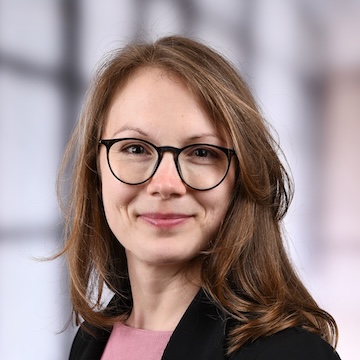
is a postdoctoral researcher in media studies at the University of Tübingen and the University of Osnabrück, with research foci spanning game studies, transmedial narratology, media ethics, critical AI studies, and gender and queer studies. Her recent publications include the monograph Metareference in Videogames (Routledge 2025) and the edited collection Videogames and Metareference: Mapping the Margins of an Interdisciplinary Field (with Jan-Noël Thon, Routledge 2025) as well as several articles and chapters on retro indie games, queer comics, or fair AI. Within the discursive field of the postdigital, she is particularly interested in how “new” digital media such as indie metagames or analogue horror remediate “older” non-digital media, exploring entanglements between aesthetics, materiality, and affect.
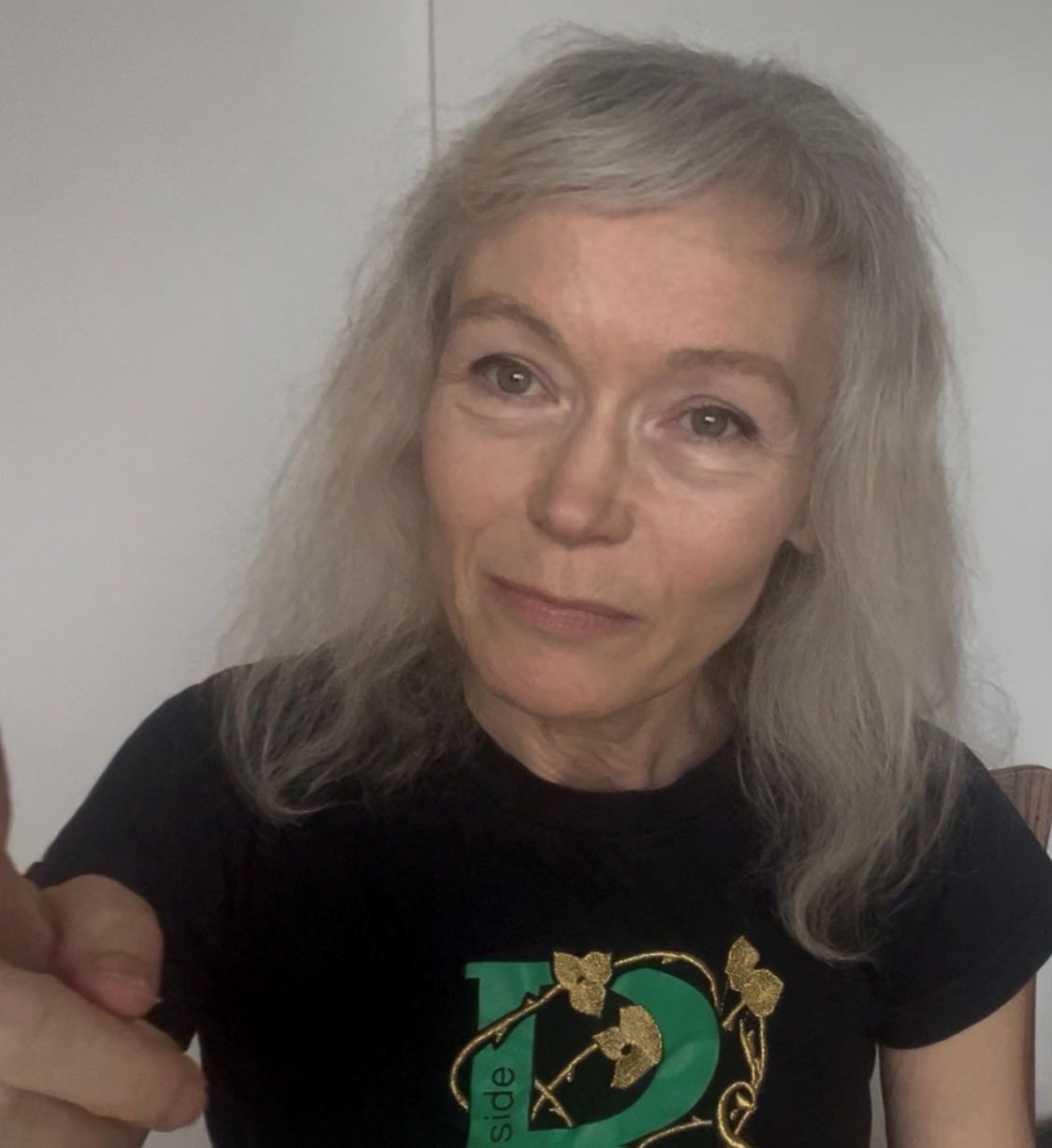
is a Professor of Education specializing in language and literature at Jönköping University, Sweden. Her research explores how literary practices, values, and modes of circulation change in relation to broader cultural and technological shifts, including globalization, mediatization, and, more recently, generative AI. She currently collaborates with computer scientists, schools, authors, and the publishing house Bonnier in projects aiming at developing responsible and meaningful AI practices in contemporary literary production and education. Lindberg co-edited Framing Futures in Postdigital Education (2024), leads the graduate research school Culturally Empowering Education through Language and Literature (CuEEd-LL), and is part of the Graduate School for AI in Teacher Education (GRAITE). She is also co-leading a project on national literary canons and is a member of the Nordic Research Network on Literature Education.
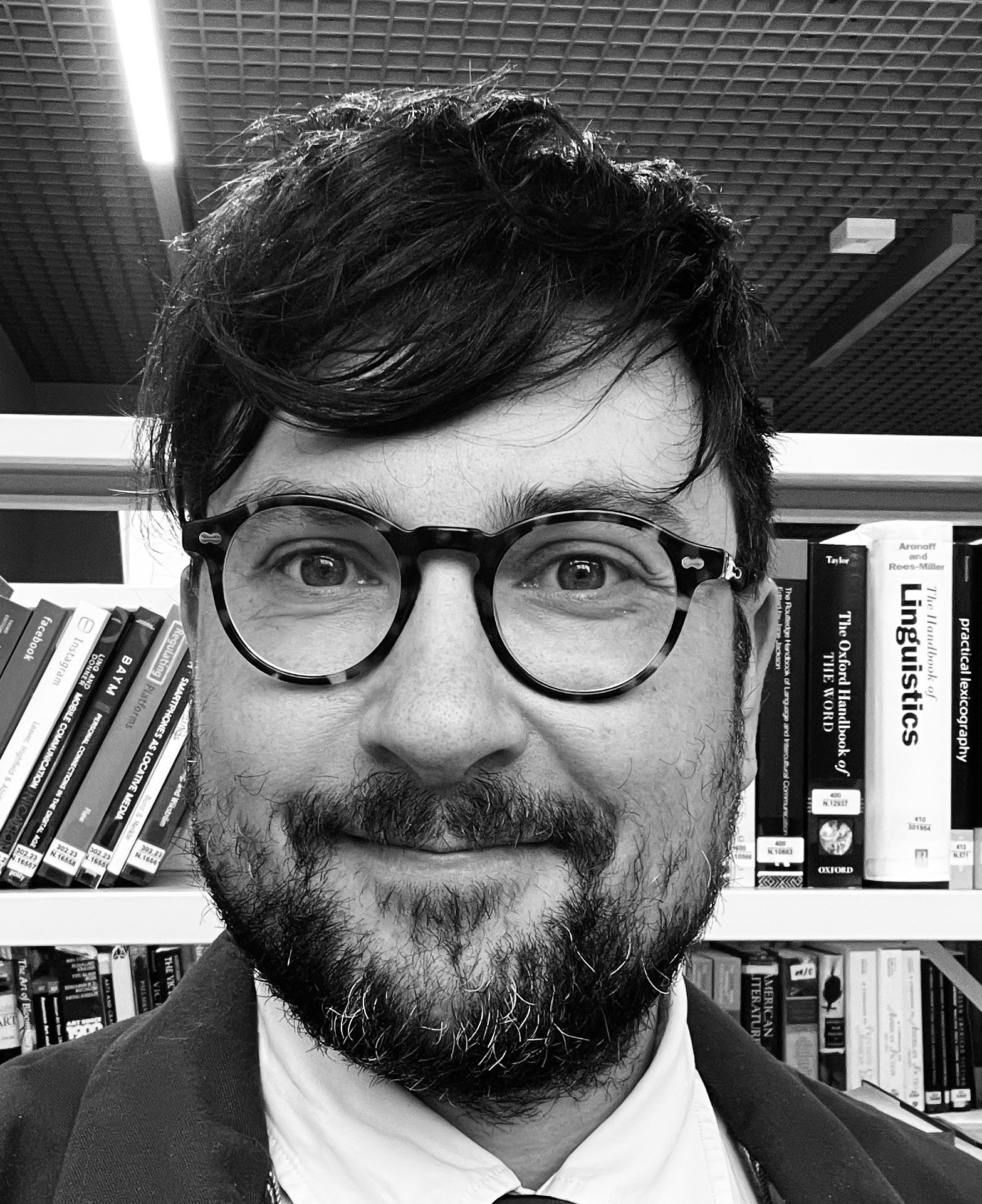
is Assistant Professor at the Institute of English Studies, University of Warsaw. His research focuses on digital fiction, postdigital publishing, critical AI studies, and contemporary social media cultures. He is the author of multiple peer-reviewed articles and book chapters, including publications in The Palgrave Handbook of Intermediality (2023) and de Gruyter/Brill’s New Approaches to Transcodification (2025). He is currently co-editor of Postdigital Fiction: Theory, Method, Analysis with Alice Bell (Routledge, 2026). He serves as Deputy Editor of Anglica. An International Journal of English Studies and as a member of the Editorial Board of Storyworlds: A Journal of Narrative Studies. He also organises and hosts the academic lecture and discussion series New Media in Contemporary Culture at the University of Warsaw. His work examines app-based narratives, AI-generated literature, influencer cultures, meme circulation, and transmedial storytelling practices. Within the field of postdigital media studies, his research explores intersections between literature, software infrastructures, and platform economies, with particular attention to narrative experimentation, interface aesthetics, participatory cultures, and the cultural implications of algorithmic mediation.
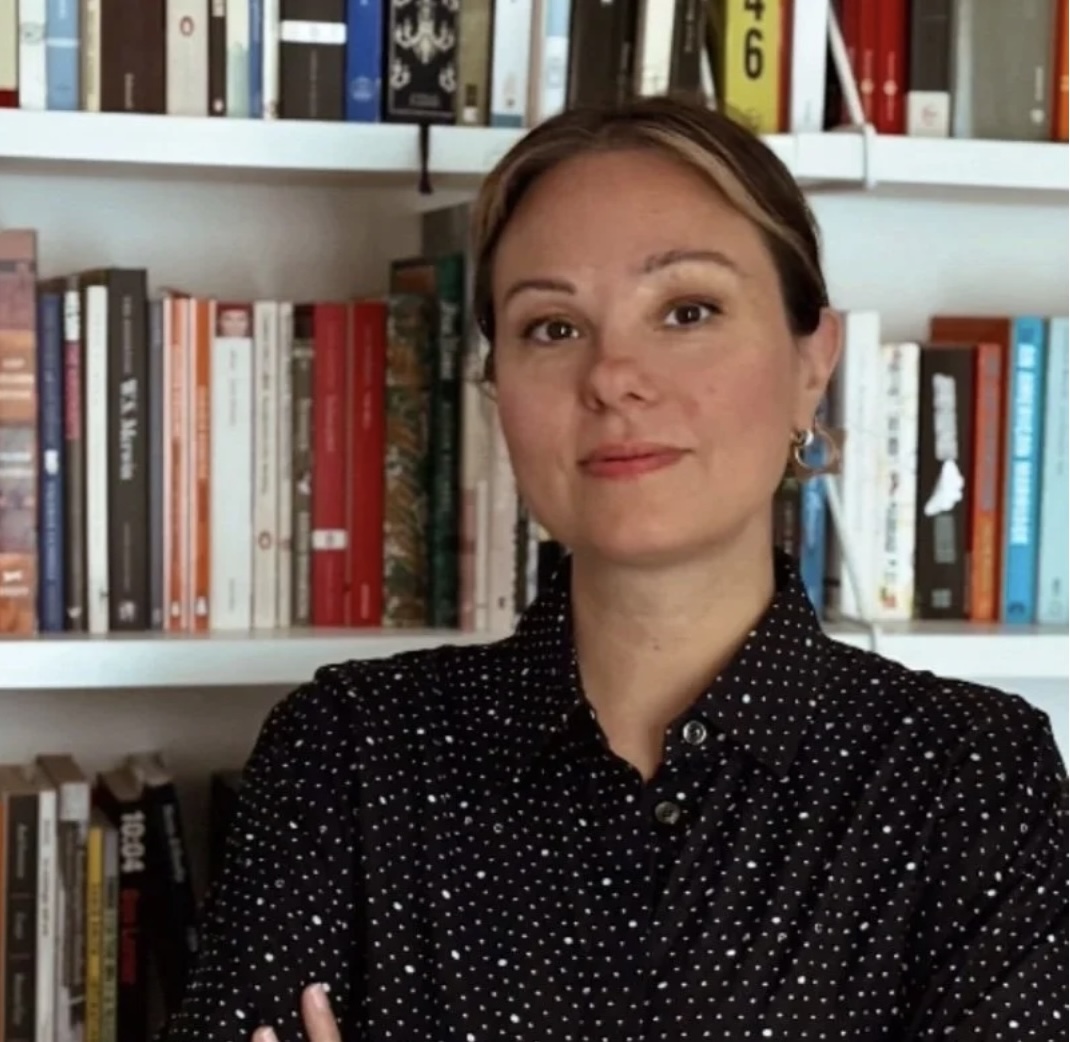
is Assistant Professor in the Department of English at the Universitat Autònoma of Barcelona in Spain, where she teaches U.S. Literature and Literary Theory. She is the author of Post-Postmodernist Fiction and the Rise of Digital Epitexts (Ohio State University Press, 2023), co-editor of Narrative Co-Construction (2026, OSU P, with Effron and McMurry), and her articles have appeared in journals including Narrative, Poetics Today, Neohelicon, the European Journal of English Studies (EJES), and Enthymema. She is a Ramón y Cajal fellow, currently working on a research project investigating the convergence of sincerity, intersubjectivity, political critique, and digital paratexts in contemporary literary narratives.
is Professor of Comparative Literature at the Johannes Gutenberg University Mainz. Previously, she held a junior professorship in Italian and French literature at the Freie Universität Berlin (until 2015), followed by various interim and visiting professorships in Germany and abroad (including Humboldt-Universität zu Berlin, Ruhr University Bochum, University of Graz, and University of L’Aquila). She is an internationally renowned scholar in intermediality and transmediality studies, with a particular focus on transmedial narratology and related fields (e.g., fictionality/factuality, meta-phenomena across media, author and narrator concepts, performativity). Her book Intermedialität (UTB 2002) is considered a foundational work in the field. Her copious publications in German and international contexts address both inter- and transmediality theory and its variegated applications. She also co-edits the book series “Studies in Intermediality” (Brill) alongside Nassim W. Balestrini (University of Graz/CIMIG). Regarding the “postdigital,” she has a particular interest in two closely related topics: first, how digital transformation processes have affected, and are reflected in recent literary developments, especially in book culture (such as the remarkable boom in so-called “bookish books” beginning in the 2000s); second, the challenges that these developments, and more generally, today’s radically altered media landscape, pose to established theoretical frameworks—particularly those of inter- and transmediality studies (but also narratology and related fields). As these frameworks primarily took “traditional media” as their point of departure, their reevaluation from a postdigital perspective appears timely.
studied German and English Literature, Sociology, and Literary Theory in Leuven, Louvain-la-Neuve, Berlin and Gießen. He is Professor of German Studies, Literary Studies, and Comparative Literature at the Vrije Universiteit Brussel (VUB) and Research Fellow at the Institute of Jewish Studies of the University of Antwerp. He was granted the Fritz Halbers Fellowship Award (Leo Baeck Institute), the Tauber Institute Research Award (Brandeis University), the Memorial Foundation for Jewish Culture Award, the Prix de la Fondation Auschwitz, the Prize for Research Communication of the Royal Flemish Society of Belgium for the Arts and Sciences, and the Theodor Frings Prize of the Sächsische Akademie der Wissenschaften. His research interests center on comparative literature, literary sociology, twentieth-century German (Jewish) literature, literary translation, migration and exile, multilingual literature. He published widely on Cultural Studies, Translation Studies, Autobiography Studies, German-Jewish literature, and literary theory. His recent work further explores the postdigital condition, focusing on how digitally mediated environments transform memory cultures, multilingual literary expression, and transnational modes of cultural transmission.
is a PhD candidate at the School of Humanities and Digital Sciences of Tilburg University, The Netherlands. She is trained as a linguist and has worked as a language teacher and teacher educator in secondary and higher education before her affiliation with Tilburg University. Her current PhD project examines the intersection between literacy education and digital literacy, and she is particularly interested in the integration of AI literacy with L1 education. She brings together insights from the fields of (computational) linguistics, literary studies, and digital literacy to establish a meaningful and critical reflection on the ways we communicate with GenAI. Her research interests include the reciprocal relationship between technology and communication, evolving reading and writing practices due to language technology, and the approach of postdigital literacy to understand the interconnection between technology and society.
is Professor and Chair of Media Studies and Media Education at Osnabrück University, Germany. His research interests focus on the aesthetics, narrativity, and postdigitality of contemporary media forms and media cultures as well as on the interdisciplinary research fields of film studies, television studies, comics studies, game studies, and critical AI studies. Recent books include From Comic Strips to Graphic Novels (co-edited with Daniel Stein, De Gruyter 2013), Storyworlds across Media (co-edited with Marie-Laure Ryan, University of Nebraska Press 2014), Game Studies (co-edited with Klaus Sachs-Hombach, von Halem 2015), Transmedial Narratology and Contemporary Media Culture (University of Nebraska Press 2016), Subjectivity across Media (co-edited with Maike Sarah Reinerth, Routledge 2017), Comicanalyse (co-authored with Stephan Packard, Andreas Rauscher, Véronique Sina, Lukas R.A. Wilde, and Janina Wildfeuer, Metzler 2019), Comics and Videogames (co-edited with Andreas Rauscher and Daniel Stein, Routledge 2021), Bildmedien (co-edited with Frauke Berndt, De Gruyter 2023), Comics and Agency (co-edited with Vanessa Ossa and Lukas R.A. Wilde, De Gruyter 2023), AI Aesthetics (co-edited with Lukas R.A. Wilde, Routledge 2025), Videogames and Metareference (co-edited with Theresa Krampe, Routledge 2025), and Postdigitale Ästhetik (De Gruyter 2026).
is a visiting Professor at University of Cologne and a postdoctoral researcher at Tilburg University. At Ghent University, he defended his FWO-funded PhD research project Widening the Net: The Sublime Imagination of the Internet in the Flemish and Dutch Novel, which focused on the postdigital sublime and representations of the internet in Flemish and Dutch fiction. He published articles on the literary imagination of the early internet in the 1990s and information overload in Dutch fiction, as well as on Dutch-language experimental literature, contemporary poetry, and electronic literature.

is Professor of Intercultural German Studies at the Faculty of Translation, Linguistics, and Cultural Studies at Johannes Gutenberg University Mainz. She is also president of the Carl Einstein Society. As a literary and cultural scholar, she is particularly interested in the cultural effects of the post-digital age and its narrative, as well as global technological interconnectivity and their interactions with literature, writing, and language aesthetics. Together with Anna-Lena Eick and Irina Rajewsky, she organized the workshop After Digitization: An Inventory from a Transcultural Perspective in November 2024 and (together with Anna-Lena Eick) the panel Interferences. Post-Digital Culture(s) and World Literature at the DGAVL conference World Literature in Media Change (September 2026) in Mainz.